.png)
(Case Study) Aquatic Weed Cutting Restoring Open Water
Aquatic weed growth can quickly become unmanageable, particularly during the spring and summer months when conditions are ideal for rapid growth.
This project involved cutting and clearing dense aquatic vegetation using a Truxor machine, restoring open water and improving the overall condition of the pond.
The Challenge
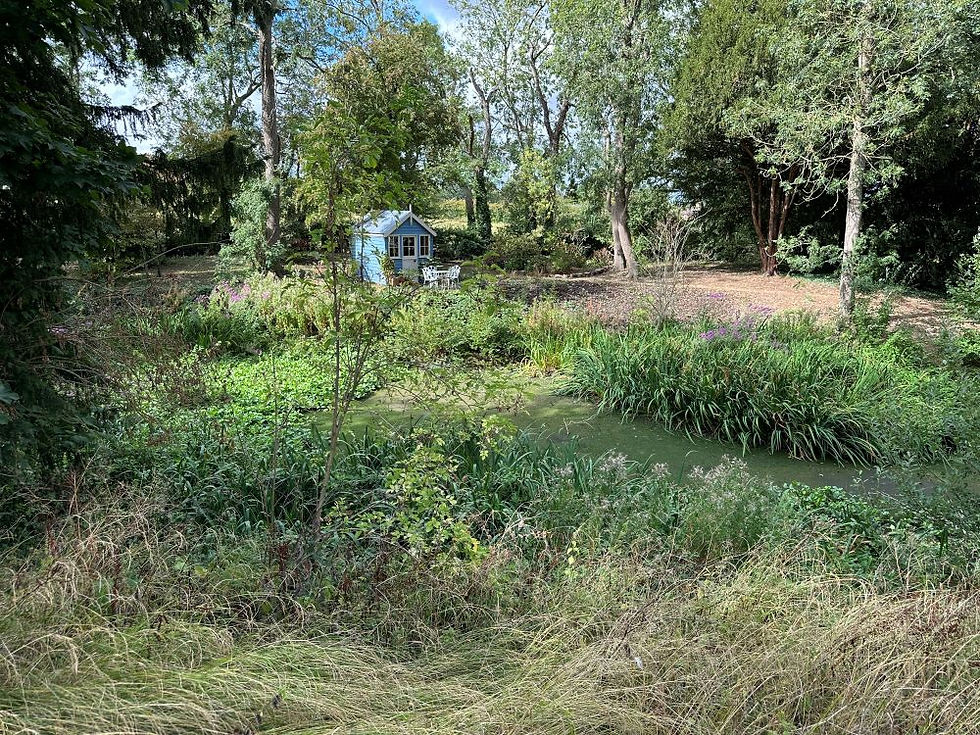
At the time of the works, the pond was heavily overgrown with aquatic vegetation across a large proportion of the surface.
The weed had built up to a point where it was beginning to impact both the usability and general condition of the waterbody.
This resulted in:
A significant reduction in open water
Restricted water movement
Poor overall appearance
Rapid ongoing growth due to seasonal conditions
Without intervention, the vegetation would have continued to spread and dominate the pond.
Our Solution
We carried out a full cut and clear of the aquatic weed using a Truxor amphibious machine, which is specifically designed for working in and around water.
The process was carried out in stages to ensure the most efficient removal of material.
1. Initial Cutting
The weed was cut as close to the bed as possible using the Truxor’s cutting attachment.
This allows:
The bulk of the vegetation to be separated from the root system
Large areas to be cleared efficiently
The material to be brought under control ready for removal
Care was taken to work methodically across the pond to avoid leaving isolated patches.

2. Collection and Removal
Once cut, the vegetation was then:
Raked together using the Truxor
Collected in manageable sections
Transported across the water to the bank
Due to the volume of weed present, this stage is often the most time-consuming, as all material must be physically removed from the water to achieve a proper result.

3. Deposit and Composting
All arisings were removed from the water and deposited in a suitable area on site.
The material was:
Stockpiled on the bank
Left to drain and dewater naturally
Allowed to compost over time
Removing the weed from the waterbody is important, as leaving it in situ would allow nutrients to recycle back into the pond.
The Results
Following completion of the works, the pond was returned to a far more manageable condition.
The clearance achieved:
A significant increase in open water
Improved water movement
Removal of the bulk weed mass
A much cleaner and more usable waterbody
The results were immediate, with a clear visual improvement across the entire pond.

Key Considerations
While weed cutting is highly effective, it is important to understand its role within long-term pond management.
The root system remains in place, meaning regrowth will occur
The rate of regrowth depends on nutrient levels and conditions
Ongoing maintenance may be required to keep the pond under control
Weed cutting should therefore be viewed as a method of managing vegetation rather than permanently removing it.
Summary
This project demonstrates how effective a mechanical cut and clear can be when carried out using the correct equipment and approach.
By removing large volumes of vegetation efficiently and ensuring all material is taken out of the water, it is possible to quickly restore open water and improve overall pond condition.
Need Advice or a Quote?
Simply Aquatic provides aquatic weed cutting and removal services across the UK using specialist machinery such as the Truxor.
If your pond or lake is becoming overgrown and you are unsure on the best approach, feel free to get in touch. We are always happy to provide advice based on your specific site.